How to Teach Addition to Kids: 10 Easy Ways to Make Adding Fun at Home
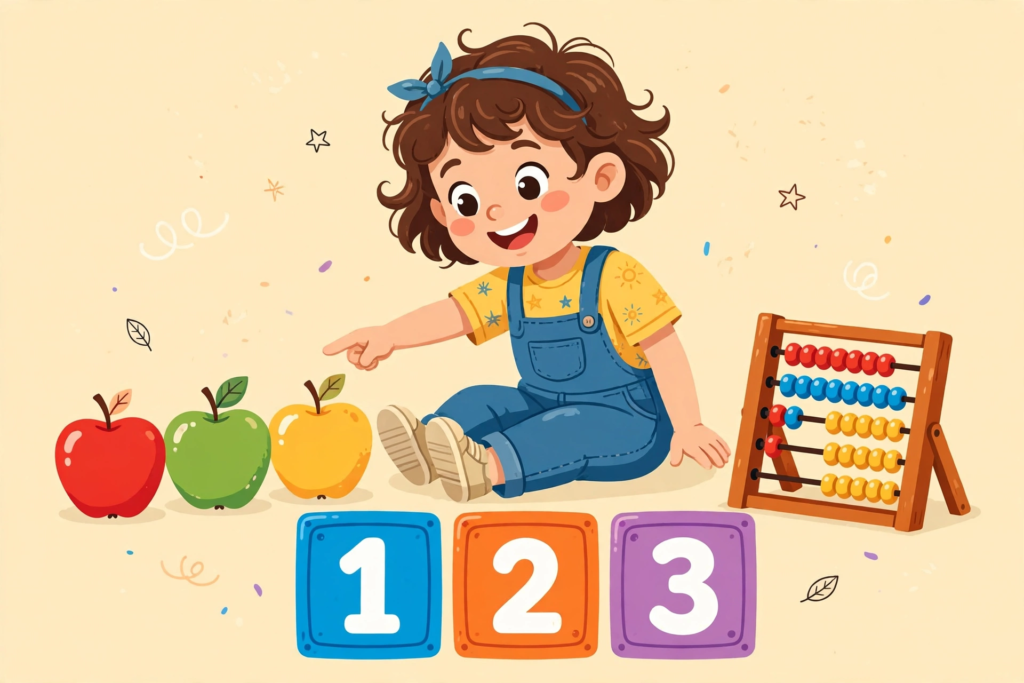
Addition is the first real maths skill most children meet — and for many parents, it is also the first time maths homework turns into tears at the dining table. A child who can count to 20 perfectly may still freeze when asked “what is 4 + 3?” Usually it means addition was introduced as symbols on a page before it was understood as something real: putting things together.
The good news is that addition is one of the easiest maths skills to teach at home, because it lives everywhere — in toys, in the kitchen, in pocket money. You need ten minutes a day, a few everyday objects, and the patience to let your child touch and count before they memorise. Here are ten easy ways that work for children aged 3 to 8.
First, Help Your Child Understand What “Plus” Means
Before any sums, your child needs one idea: addition means putting groups together to find how many there are in all. Take three toy cars, add two more, and count them all — “3 and 2 more make 5.” Say the words out loud often: “and”, “more”, “altogether”, “in all”, “total”. Do not rush to the “+” sign: for a 4-year-old, “3 apples and 2 apples” is a real thing, while “3 + 2” is just a strange drawing.
10 Easy Ways to Teach Addition to Kids
1. Count Real Things, Not Just Numbers
Put five spoons on the table, ask your child to add three more, then count them all. Try buttons, bottle caps, blocks or biscuits. Real objects make addition visible — your child can see the groups joining. Change the objects often to keep it fresh.
2. Let Them Use Their Fingers
Many parents worry when a child counts on fingers, but fingers are a child’s first maths tool — and a very good one. Hold up 4 fingers on one hand and 3 on the other, then count them all: 7. Fingers are always available, and they build the habit of counting on from a number. Children drop the habit on their own when ready, usually around Class 1 or 2.
3. Hop Along a Number Line
Draw numbers 0 to 20 on paper or with chalk on the floor. Stand on 4, then hop 3 steps forward — where do you land? 7! This teaches the most useful addition skill: counting on from a number instead of starting from 1 every time.
4. Play Dice and Board Games
Snakes and Ladders, Ludo and simple dice games are secretly addition lessons. Every roll asks your child to add the dice and move forward that many steps. Two dice are even better: “You rolled 4 and 3 — how many steps is that altogether?” Children who play dice games twice a week learn small sums like 3 + 4 without a single worksheet.
5. Do Kitchen Maths Every Day
The kitchen is the best maths classroom in the house. “We need 4 rotis for dinner and 2 more for papa — how many in all?” Food makes addition tasty and real. Let your child help with real jobs: counting plates for the family or adding up the fruits in a basket.
6. Tell Little Story Sums
Children remember stories far better than bare numbers. “Riya has 3 red balloons. Her friend gives her 2 more. How many balloons does Riya have now?” Use your child’s name, their friends’ names, their favourite foods and toys. When a sum is a story, your child pictures it — the first step to solving it mentally. Once story sums feel easy, try our free Word Problems: Add and Subtract game, where children solve the same kind of little stories on screen.
7. Learn Doubles First
Doubles — 1+1, 2+2, 3+3, up to 5+5 — are the easiest sums to remember because the two numbers are the same. Once doubles are quick, “near doubles” follow: if 4 + 4 is 8, then 4 + 5 is just one more. Play our Doubles Up to 20 game for a few minutes a day and watch these facts become automatic.
8. Teach the “Make 10” Trick
Ten is the friendliest number in maths. Show your child how pairs like 6 + 4, 7 + 3 and 8 + 2 all make 10, using ten fingers, ten blocks or ten coins. When children know these pairs by heart, bigger sums get easier: 8 + 5 becomes “8 needs 2 to make 10, and 3 are left, so 13.”
9. Play Addition Games Online for 10 Minutes
Short, playful screen practice works well when it follows real-object play — not instead of it. A quick game after homework keeps addition fresh and gives instant feedback. Try our free Addition Up to 20 game: it starts with small sums and slowly builds up, so your child always feels challenged but never lost. Ten minutes is enough; stop while it is still fun.
10. Draw the Sum
Some children understand best by drawing. For 5 + 3, draw five circles, then three more, then count them all. Stick figures, stars, flowers — anything works. Drawing slows a child down just enough to think. The drawing fades away on its own as answers start coming faster.
A Simple 10-Minute Daily Routine
You do not need an hour. Done most days, this tiny routine builds real addition skill in a month: minutes 1–3, warm-up counting — forwards and backwards, on stairs or with claps; minutes 4–7, one hands-on activity from the list above — kitchen maths on Monday, dice on Tuesday, drawing on Wednesday; minutes 8–10, two or three story sums, or a few minutes on an addition game. End with a sum your child can definitely get right, so the session ends in a smile.
Common Mistakes Parents Make
Starting with worksheets too early. A page full of “3 + 4 = ?” means nothing to a child who has never joined real groups together. Objects first, paper later.
Insisting on speed. “Quick, quick!” makes children guess instead of think. Slow, sure answers today become fast answers in a few weeks.
Correcting every mistake instantly. When your child says 4 + 3 is 8, ask “Can you show me with your fingers?” Finding their own mistake teaches more than being told the answer.
Comparing with other children. “Your cousin could do this at your age” helps nobody. Children learn at different speeds, and a relaxed child learns faster than a worried one.
Skipping the “why”. If your child only memorises 5 + 3 = 8 without knowing it means “five things and three more things”, the memory will fade.
What Comes After Addition?
Once addition feels easy, two doors open: subtraction — simply addition in reverse — and multiplication tables, which are really just fast addition. A child strong at adding finds tables far less scary. When your child is ready, read our blog How to Teach Multiplication Tables Without Rote Fear. And if story sums still feel tricky, read Word Problems Without Tears.
FAQs
At what age should my child learn addition?
Most children begin with tiny additions — 1 + 1, 2 + 1 — around age 4 or 5, using objects and fingers. Written sums usually start in KG and Class 1 (ages 5–6).
My child counts on fingers for every sum. Is that a problem?
No — it is a normal and healthy stage. Finger-counting builds number sense, and most children stop on their own once small sums become automatic, usually in Class 1 or 2.
How do I teach addition to a child who hates maths?
Stop calling it maths for a while. Bake together, play dice games, build with blocks — and quietly add the sums into the play. When a child works out “how many altogether” during a game they love, the fear starts to fade.
Should I use worksheets for addition practice?
Worksheets are fine as a small part of practice, once your child already understands addition with real objects. Keep them short — five sums, not fifty — and mix them with games and story sums. If a worksheet causes tears, put it away and go back to objects for a few days.
How long does it take for addition to become easy?
With ten minutes of playful practice most days, most children become comfortable with sums up to 10 within a month or two, and sums up to 20 within a few months after that. Every child is different, and a wobbly week is normal.
Keep It Small, Keep It Playful
Addition is not a race — it is a life skill your child will use every day, from sharing sweets to counting change. Teach it with real things, stories and games, ten minutes at a time. Start today with one idea from this list, and watch “I can’t do maths” turn into “I can do it myself.”
Try our free educational games for kids — play now, no login needed.