First, Second, Third: How to Teach Ordinal Numbers to Kids at Home
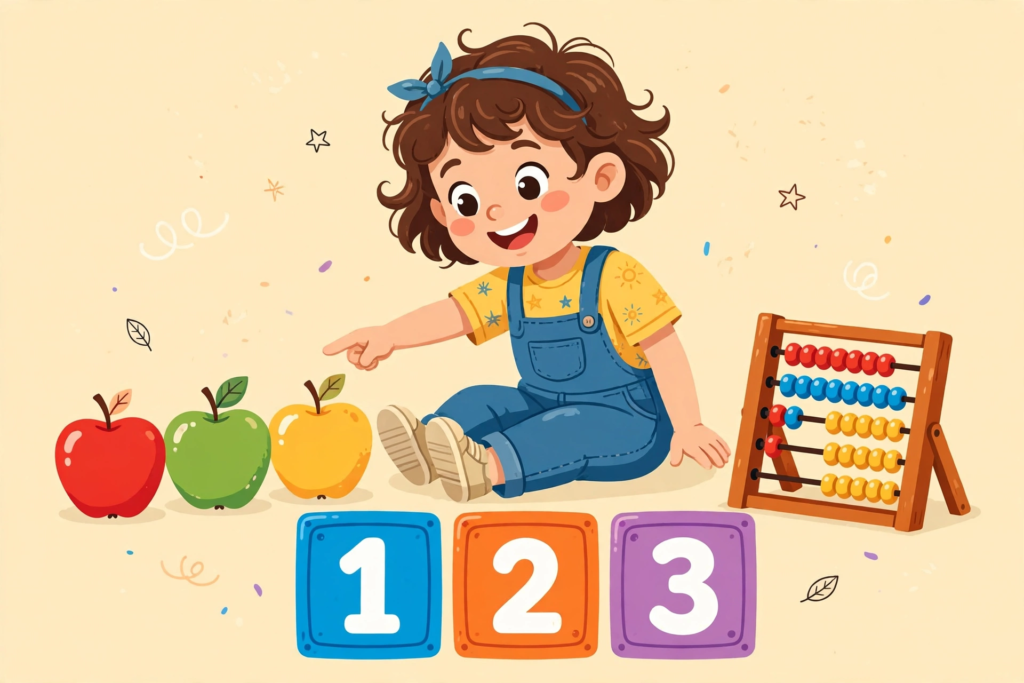
“Who came first?” If you have ever watched your child race their brother or sister to the gate, you have heard this question a hundred times. Children argue about who is first, who is second, and who gets the first turn — long before school ever teaches the words. That everyday argument is the perfect doorway into ordinal numbers.
Ordinal numbers — first, second, third, fourth, and so on — tell us the position of something in a line, not how many things there are. They are small words, but they unlock a big idea: order. And the best part? You can teach them without a single worksheet, using races, queues, stairs, and snack time. This guide shares eight playful ideas for Nursery, KG, and Class 1-2 kids.
Counting Numbers vs Ordinal Numbers
Most children first meet numbers as counting numbers: one apple, two apples, three apples. These answer “How many?” Ordinal numbers answer a different question: “Which position?” One toy car, two toy cars, three toy cars — that is counting. The red car came first, the blue car came second, the green car came third — that is order.
This difference confuses many children at first, and that is normal. A child who counts “1, 2, 3” perfectly may still say “one-th” instead of “first”. The words first, second, and third are special — they do not follow the usual pattern — so they need extra play before they stick. Here is the list to practise, from first to tenth:
- 1st — first
- 2nd — second
- 3rd — third
- 4th — fourth
- 5th — fifth
- 6th — sixth
- 7th — seventh
- 8th — eighth
- 9th — ninth
- 10th — tenth
Notice the pattern: after third, most ordinal words are just the counting word plus “th” — fourth, sixth, seventh, eighth, ninth, tenth. (Fifth is the little exception: five becomes fifth, not “fiveth”.) Point this pattern out once first, second, and third feel easy.
When Should Kids Learn Ordinal Numbers?
There is no single right age — children learn order through play first. As a rough guide:
- Nursery (age 3-4): first, second, and third through races and lining up toys. No symbols like “1st” yet — just the words.
- KG (age 4-5): first to fifth, plus matching words to positions in a row of five objects.
- Class 1-2 (age 6-8): first to tenth, and later up to twentieth, including reading “1st, 2nd, 3rd” and using ordinals in story sums.
A child who counts to 20 confidently is ready for ordinal words. A child still learning to count should start with first, second, and third only.
8 Fun Ordinal Number Games to Play at Home
Pick one or two games at a time and repeat favourites often — little kids learn through repetition.
1. Toy Car Race
Line up three or four toy cars and roll them down a slope, calling out results like a commentator: “Red is first! Blue is second! Green is third!” Then let your child commentate, and race again with swapped cars — so they learn “first” is a position, not a property of the red car.
2. The Line-Up Game
Line up soft toys in a row and ask: “Which toy is first? Which is third? Who is fifth?” Then change the order and ask again. For a challenge, give instructions instead: “Put the teddy second and the lion fourth.” Following position instructions is exactly what school tests later.
3. Stair Steps
Stairs are a ready-made number line. Climbing up, count steps as ordinals: “First step, second step, third step…” Coming down, try it backwards. No stairs? Use cushions as steps. Our free Counting Backwards 20 to 1 game covers the same backwards-order idea on screen.
4. Snack Queue
At snack time, let the family “queue up” for fruit or biscuits. Ask who is first and who is second, then change places and ask again. Children love being first, so this game teaches itself — and quietly builds patience too.
5. Story Picture Order
Take three or four pictures from a storybook and mix them up. Your child puts them in order: “Which picture comes first? Which second? Which last?” Sequencing a story is ordinal thinking in disguise — and it builds reading skills too.
6. Months and Days in Order
Ordinal thinking hides in the calendar: January is the first month, February the second, March the third — can your child name the rest? Try days of the week the same way. Our Months of the Year game turns month order into a fun quiz.
7. Colour the Position
Draw ten stars or apples on paper and instruct: “Colour the third star red. Colour the seventh blue. Circle the first apple.” It looks like schoolwork, but choosing colours keeps it feeling like art. Start with five pictures for younger kids, ten for Class 1 and 2.
8. What Comes Next?
Once first-to-fifth feels easy, play “what comes next”. Say “first, second, third…” and let your child finish the pattern, then try counting: “What comes after 12?” Our What Comes Next: Numbers 10 to 50 game is built for this skill.
A Simple 5-Minute Daily Ordinal Routine
You do not need a lesson plan. Just drop ordinal words into moments that already happen:
- Morning: “Who will brush first today — you or me?”
- Breakfast: “You are sitting in the second chair. I am in the first.”
- Getting dressed: “First socks, second shoes — what comes third?”
- Evening play: One race or line-up game, just five minutes.
- Bedtime: “Which story shall we read first — the lion one or the moon one?”
Five tiny moments a day beat one long lesson a week.
5 Common Mistakes Parents Make
1. Teaching ordinal words before counting is steady. If a child cannot count objects to five yet, “third” will not make sense. Counting first, ordinals second.
2. Only practising first, second, and third. Children then guess “fourth” as “four-th” or freeze at fifth. Move gently to fourth and fifth once the first three are easy.
3. Correcting every mistake sharply. If your child says “one-th”, smile and model the right word: “Yes — the red car came first!” Children copy correct language faster than they learn from corrections.
4. Using worksheets too early. A row of printed boxes is abstract. Real toys, real stairs, and real queues teach position far better. Worksheets can come later, for Class 1 and 2 revision.
5. Forgetting that “first” changes with order. Always shuffle the line-up, re-race the cars, and change the queue. If the teddy is always first, your child may think “first” means “teddy”.
FAQs About Ordinal Numbers for Kids
What is the difference between cardinal and ordinal numbers?
Cardinal numbers tell how many: one, two, three apples. Ordinal numbers tell position: the first apple, the second apple, the third apple. They answer different questions — “how many?” versus “which one in the line?”
At what age should my child learn ordinal numbers?
Most children meet first, second, and third naturally between ages 3 and 5 through races and games. Formal learning — reading 1st, 2nd, 3rd and going up to tenth — usually fits KG to Class 2. Follow your child’s counting level rather than a fixed age.
My child says “one-th” instead of “first”. Is that a problem?
Not at all — it is a clever guess. Your child has spotted the “-th” pattern and is applying it. Just model the special words often — “first, second, third” — through races and songs, and the correct forms will follow on their own.
How far should Class 2 kids go — tenth or twentieth?
Tenth is the usual Class 1-2 goal, and it covers most schoolwork. If your child is confident to tenth, try eleventh to twentieth as a fun stretch — birthdays and race results are great places to meet them. Our guide on Tens and Ones Made Easy helps once numbers cross ten, and Word Problems Without Tears shows position words in story sums.
Can games really replace worksheets for ordinal numbers?
For ages 3 to 8, yes — games teach position better than paper, because position is something children feel with their bodies: standing in a line, climbing steps, racing cars. Short worksheets suit Class 2 revision, but only after the idea makes sense through play.
Closing
First, second, third — three little words that open the door to order, sequences, and story sums. Teach them the way children learn: in a race to the gate, a queue for biscuits, on the stairs to bed. Start with one game from this list today, keep it to five minutes, and watch how quickly “Who is first?” becomes a question your child can answer with confidence.
Want more playful maths practice? Try the free games on Edu Games, like What Comes Next: Numbers 10 to 50, and read our other parent guides.
Try our free educational games for kids — play now, no login needed.